contact us

Data Analytics & ML

Statistical analysis, machine learning and decision models built around your business questions, data and operating processes.

We help you understand patterns, develop and validate models, and turn the results into decisions. We can deliver a focused analysis or model, or integrate the results into your existing systems and data products.

Questions we help answer

We start from the decision you need to make, then choose the method that fits the question and the data.

Statistical analysis

What drives a result? Test relationships, compare segments and periods, and separate real effects from noise before you act on them.

Predictive and prescriptive modelling

What is likely to happen, and what should we do about it? Anticipate outcomes such as demand, risk or delays, and compare options within your constraints.

Similarity and segmentation

Which records belong together? Group customers, products or materials that behave alike, or find records that describe the same thing.

Anomaly detection

What looks unusual? Flag unexpected values, transactions or patterns so teams can review them before they affect reporting or operations.

Analytics & ML in practice

Real examples of how analytics and machine learning create value.

Master Data Optimization

The Master Data Optimization solution uses material descriptions, attributes and purchasing patterns to identify similar and duplicate materials across plants and ERPs. Its similarity engine groups candidates, estimates consolidation opportunities and supports steward review through keep, block and obsolete decisions.
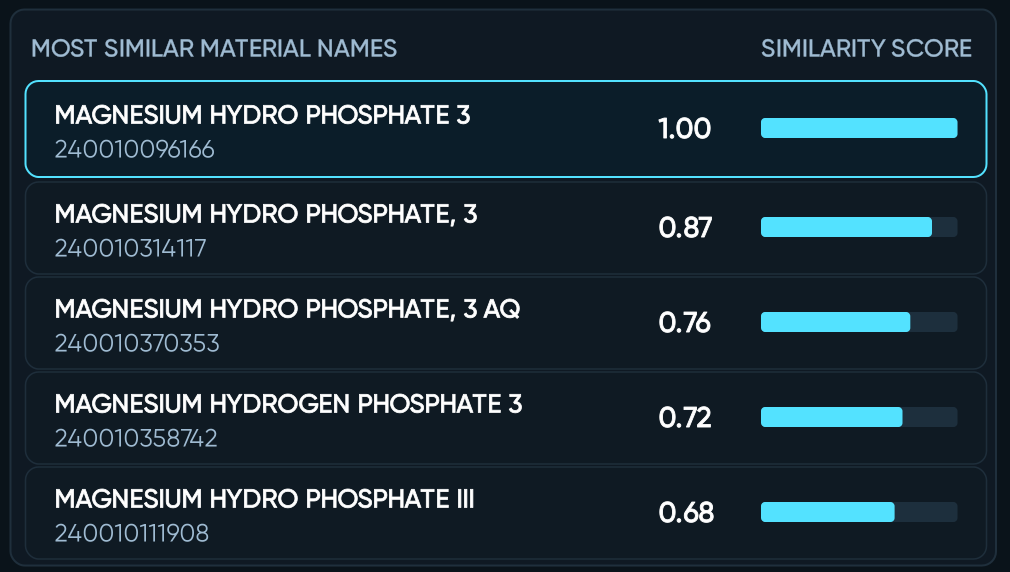
Material-name similarity: the five material names most similar to a reference material, ranked by similarity score from 1.00 to 0.68.
  1. Material descriptions, attributes and purchasing patterns
  2. Similarity assessment and candidate groups
  3. Estimated consolidation opportunities
  4. Steward review: keep, block or obsolete

Delivered for an FMCG / manufacturing client under NDA, with Python, an AI/ML similarity engine, ERP integration and Power BI. Figures shown in the case study come from a standalone demo on synthetic data.
Client pilot

Predictive Maintenance for Spray Dryers

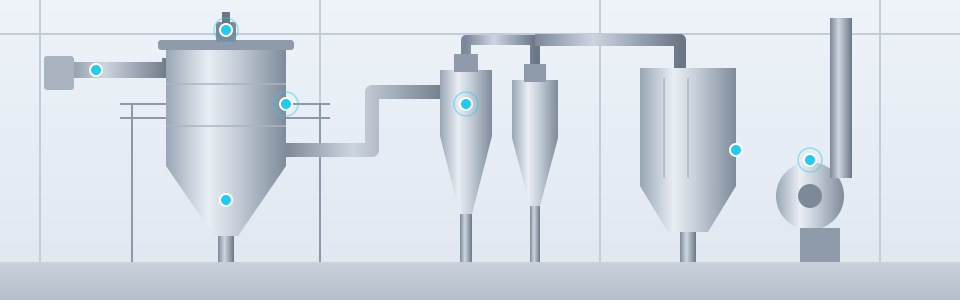
An FMCG client pilot (2025–2026) uses contextual expected-value models, residual rules and degradation forecasts to support maintenance decisions. Forecast uncertainty and model/data-health monitoring sit alongside equipment diagnostics and planned maintenance windows.

Illustration of an industrial spray dryer with drying chamber, cyclones, bag filter and exhaust fan, with sensor points marked.
Illustration

The case-study screenshots use synthetic/demo data.

How we deliver

Four steps, scaled to the question. A validated analysis with clear recommendations can be the right result; not every engagement ends in a production deployment or a dashboard.

  1. 01

    Define the decision

    Agree the business question, the decision it supports and how success will be judged.

  2. 02

    Assess and prepare the data

    Check whether the available data can answer the question, then clean, combine and prepare it.

  3. 03

    Build and validate

    Develop the analysis or model, test it against data it has not seen, and document its assumptions and limitations.

  4. 04

    Integrate or hand over

    Deliver the result in the agreed form, with clear ownership for monitoring, retraining and updates.

Ways to use the result

Start with a focused analysis or model, or integrate the results into your applications and data products.

A focused analysis or model

A defined question, a validated analysis or model, and documented findings your team can act on and maintain.

Integrated into your applications

The model or its outputs built into your existing systems, data platform or workflows, together with your IT team.

Part of a data product

Combined with business rules, a review workflow and an interface into a complete data product.

Which business question needs an answer?

Bring one decision, forecast or data set to a 30-minute discussion - we’ll look at what your data can support and a practical first step.

Book a 30-minute discussion