Challenge
Inspection data sat behind an API and was consumed manually through exported reports.

Inspection data from the SafetyCulture API, delivered automatically to the analytics layer.
Scheduled SafetyCulture API ingestion orchestrated by Stonebranch and run through Azure Data Factory, with data prepared in Azure Data Lake and Snowflake for reporting and monitoring.
Challenge
Inspection data sat behind an API and was consumed manually through exported reports.
Delivered
A Stonebranch-scheduled batch pipeline from the SafetyCulture API through Azure Data Lake into Snowflake.
Enabled
Structured reporting, compliance monitoring and alerts based on refreshed inspection data.
Many organizations rely on SafetyCulture to conduct inspections, track compliance, and manage safety risks - but the data sits behind an API and was previously consumed manually. Safety and compliance information was scattered across exported reports, making compliance tracking, trend detection, and decision-making slow and error-prone. The team needed an automated pipeline that fetches inspection data directly from the SafetyCulture API and feeds it into a structured analytics layer.
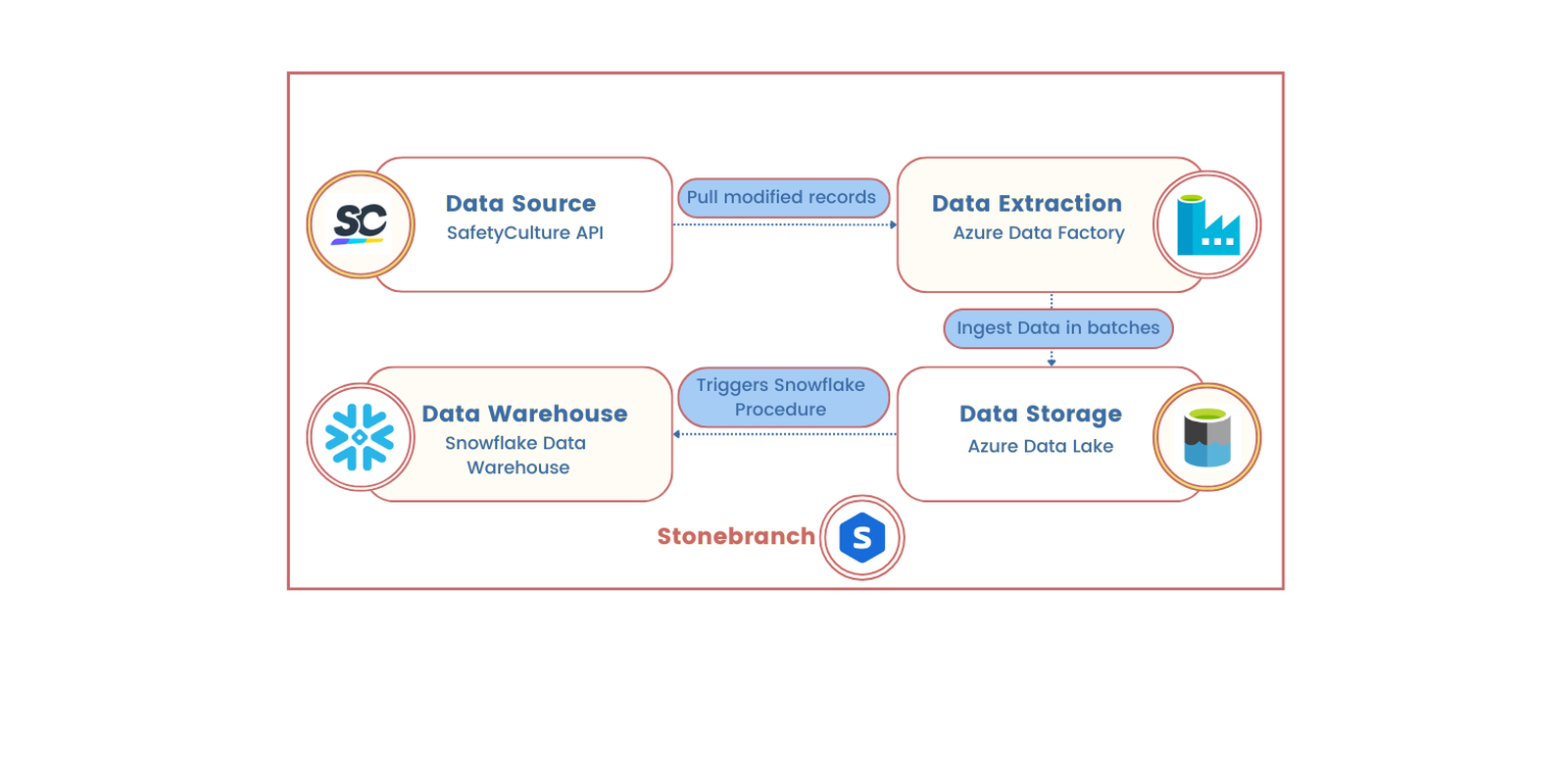
We designed an end-to-end data pipeline to automate the extraction and processing of SafetyCulture data. Stonebranch schedules and orchestrates batch runs in which Azure Data Factory retrieves inspection records from the SafetyCulture API into Azure Data Lake. From there, the data is standardized, enriched, and loaded into Snowflake for structured reporting.
An alert and monitoring layer uses refreshed inspection data to surface compliance status changes and operational anomalies after scheduled ingestion runs, rather than relying on manually collected reports.
The project's pipeline diagram.
Stonebranch schedules and orchestrates batch runs. Azure Data Factory retrieves inspection records from SafetyCulture into Azure Data Lake.
Data is standardized, enriched and loaded into Snowflake for structured reporting.
Refreshed inspection data supports compliance monitoring and alerts on operational anomalies.
Qualitative project outcomes; no measured effort or time savings are claimed.
Significantly reduced manual effort in inspection data management
Faster data availability for decision-making
Improved compliance tracking and risk assessment
Seamless integration with existing reporting tools
Automated compliance and operational alerts based on refreshed inspection data
Foundation for trend analysis and predictive risk models
Solution areas: Data Foundations

Choose a 30-minute conversation or send us a short enquiry - whichever works for you.